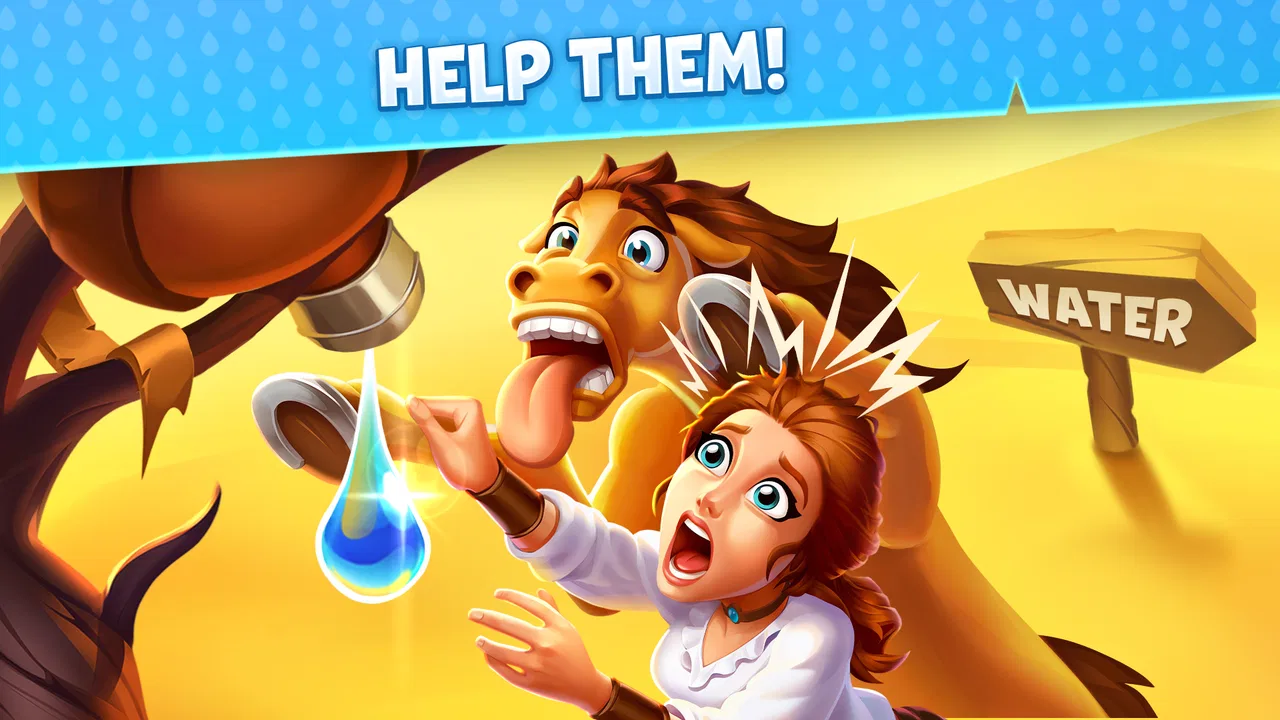
Island Hoppers: Farm Adventure
- 4.3
- Rating
- 10.00M
- Installs
- Free
- Price

 Analysis by App-foxy
I found Island Hoppers: Farm Adventure most appealing when I wanted something lighter than a traditional adventure game but more active than a simple farming simulator. It combines island exploration, harvesting, small puzzles, and mini-games into a colorful mobile experience that is easy to start in short sessions. I could make a little progress during a spare moment, then return later with a clear idea of what I wanted to finish next.
The game is free to download and comes from NEXTERS GLOBAL LTD. It is listed for Everyone, runs on Android devices using version 5.0 or later, and its current version is 0476.4. Those details make it accessible to a broad audience, although the presence of optional purchases is important to understand before handing the device to a child or treating the game as a completely cost-free experience.
What makes it different from a plain farm game is the setting and the change of pace. Instead of staying on one quiet plot and repeating the same routine, I move through a tropical adventure built around tasks and discoveries. The farming gives me a dependable activity, while puzzles and mini-games stop the experience from feeling like a single repeated action. That mix is the main reason I would recommend trying it, though it will not suit everyone.
You May Also Like

 Blood Strike: 2.5 Anniversary
Blood Strike’s Loadouts Turn Every Drop Into a Tactical Gamble
A close look at Blood Strike’s custom loadouts: how fast access to signature weapons reshapes its battle royale rhythm, rewards preparation, and narrows the gap between fights.

 Pandora - Music & Podcasts
Pandora’s Music Is Easy to Start, but Harder to Recover
Pandora’s strength is its low-effort path from a seed to a station. Its weak spot is how much confidence it asks you to place in connection, setup, and quiet recovery.

 8 Ball Pool
 Is Built on Rivalries, Rematches, and Routine
A close look at the rivalries, rematches, shared routines, and unanswered safety questions that turn a quick pool match into a persistent mobile community.

 Samsung Music
’s Quiet Strength Is Playing What You Already Own
Its reach comes less from spectacle than from dependable access to a personal library. That simplicity is both the app’s strongest retention engine and its ceiling.

 AccuWeather: Weather Radar
AccuWeather Review: A Quick, Clear Forecast for Everyday Decisions
For everyday plans, the best forecast is the one you can understand quickly. AccuWeather makes rain timing, radar, and local conditions easy to act on, with a few trade-offs.

 Hill Climb Racing
Why Hill Climb Racing Still Turns Crashes Into One More Run
A tiny car, a bumpy hill and one more upgrade: Hill Climb Racing keeps resurfacing because its simple chaos makes every near-miss feel personal.
More From Our News Desk
View All News


How Island Hoppers Builds Its Sense of Progress
I find the game’s progress easiest to enjoy when I treat each visit as one small step toward a clear island goal, rather than trying to finish everything in one sitting. That mindset also helps me notice when the mix of farming and puzzles is working—or when the routine is starting to feel repetitive. In a shared household, the next question is how to keep that progress and play time from getting muddled.
The first goals are easy to understand
The opening experience is built around practical objectives rather than complicated instructions. I am encouraged to work with the island, gather what is available, and use those resources to make the next step possible. That creates a useful rhythm: complete a small task, see a visible result, and then receive a reason to continue.
I like this approach because it gives the game direction without making me study a long rulebook. The farming side provides familiar actions, while the adventure framing makes each new objective feel connected to a larger journey. Even when I only have a few minutes, I can usually identify a sensible action instead of wandering around without purpose.
The early goals also show whether the game is right for a particular player. If you enjoy checking off objectives and gradually improving a colorful setting, the structure feels welcoming. If you prefer open-ended exploration with very little guidance, the guided nature may feel restrictive. The game wants to lead me from one activity to another, not leave me entirely alone to invent my own challenge.
That distinction matters when comparing it with more traditional farming alternatives. A dedicated farming game often gives more attention to crop planning, production chains, or long-term land management. Here, farming is part of a broader adventure loop. I do not approach each harvest only as an economic calculation; I see it as one step toward the next piece of island progress.
Progress is communicated through the world, not only through numbers
One of the stronger design choices is the way progress feels tied to what I am doing. Harvesting is not just a background chore, and puzzles are not disconnected diversions. Each activity contributes to the impression that the island is becoming more usable and that my route through it is opening gradually.
That makes the game easier to return to after a break. I do not need to remember a complex strategy from the previous session. I can look at the current task, notice which resource or activity is relevant, and resume from there. For a mobile game, that clarity is valuable because many sessions happen in interrupted conditions rather than at a desk.
My practical tip is to avoid treating every available action as equally urgent. I get more out of the game when I first identify the objective that unlocks the next meaningful step, then use spare time for harvesting or mini-games. This keeps the session focused and reduces the feeling of performing chores without a reason.
Another useful habit is to regard the puzzles as part of the progression rather than as optional decoration. When I rushed through the farming tasks and ignored the change of activity, the experience felt more repetitive. Switching between the island work and the puzzle-oriented moments gave the pacing more shape and made the return session feel less mechanical.
The challenge rises through variety more than complexity
Island Hoppers is not designed around the harsh difficulty of a specialist puzzle game. Its challenge comes from managing different kinds of objectives and adapting to the activity in front of me. Farming asks for patience and attention to the current task, while puzzles and mini-games require a different kind of concentration.
That makes the difficulty curve approachable. I can usually understand what the game expects before I become invested in a long session. The trade-off is that players looking for demanding strategic depth may find the challenge modest. This is an adventure game with accessible obstacles, not a punishing test intended to defeat me repeatedly.
I would especially recommend it to players who enjoy gentle progression but still want occasional interruptions to the routine. It works well for someone who likes the comfort of farming yet becomes bored when every session follows exactly the same pattern. The puzzles give the hands and attention something else to do without turning the whole game into a high-pressure experience.
On the other hand, I would skip it if my priority were serious competitive play, deep resource optimization, or difficult logic challenges. The appeal is the combination of activities and the steady feeling of moving through an island adventure. It is not trying to replace a dedicated strategy title or a demanding puzzle collection.
Why the pacing works in short sessions
The game fits naturally into everyday gaps. I can imagine opening it while waiting for an appointment, completing a harvest-related task, and leaving after a mini-game or puzzle gives me a clean stopping point. Later, I can return without needing a long uninterrupted block of time to make the session worthwhile.
A realistic routine would be to check the island during a commute break, focus on the next clear objective, and stop once that objective is complete. On a quieter evening, I might spend longer moving between farming and exploration. The same design supports both uses because progress is divided into manageable actions rather than requiring every visit to become a major expedition.
This flexibility is one of its best qualities, but it also creates a weakness. The individual actions can feel small when I play for too long. The game is better at encouraging regular visits than at sustaining an intense marathon session. I found that the experience remained fresher when I treated it as a sequence of brief adventures instead of expecting a large amount of novelty every time I opened it.
The visual theme helps with that relaxed rhythm. The jungle-island setting gives the farming activities a stronger identity than a generic field would have, and the adventure framing makes ordinary gathering feel connected to discovery. I would not call the presentation enough by itself to carry the game, but it supports the intended mood effectively.
Where retention becomes pressure
Because the game is free, optional purchases are part of the experience. The listed in-app purchase range runs from $0.49 to $104.99 per item. That is a wide spread, and it changes how I evaluate the game: the free entry is inviting, but anyone who dislikes purchase prompts or feels pressure to speed up progress should approach carefully.
I prefer to decide in advance whether I am playing at the game’s natural pace or whether I am willing to spend money for convenience. That simple boundary helps keep the farming and puzzle loop enjoyable. Without it, a player can start viewing ordinary waiting or repeated tasks as obstacles that should be paid away, which weakens the satisfaction of earning progress.
For families, the Everyone rating makes the game broadly approachable, but the purchase range still deserves attention. The age label describes suitability, not spending behavior. I would use the device’s purchase controls and explain clearly that the game is free to start while offering optional paid items. That is more useful than assuming the age rating removes the need for supervision.
The retention design works best for players who enjoy gradual goals. Each return visit can feel worthwhile when I have a specific task in mind. It works less well for players who want every session to deliver a major discovery or a dramatic new ability. The steady pace is comfortable, but it can also feel like a deliberate invitation to keep checking back.
How it compares with familiar alternatives
Compared with a classic farming simulator, this game gives me less reason to think purely about crop efficiency and more reason to follow an adventure route. The island setting, puzzles, and mini-games break up the agricultural routine. If I usually abandon farming games because planting and harvesting become too repetitive, this broader structure may hold my attention longer.
Compared with a conventional puzzle game, however, the puzzles are not the entire point. I am also managing the farm and following the island’s progression. Someone who wants increasingly intricate logic problems may prefer a focused puzzle title, while someone who wants a calm mixture of tasks will probably appreciate the change of pace here.
It also differs from a large, open adventure game. The goals are more compact and the sessions are easier to pause, but the sense of freedom is narrower. I am guided toward practical objectives rather than given a huge world with endless independent possibilities. I see that as a strength for casual play and a limitation for players who want deep exploration.
The most accurate comparison is therefore not “farming game with a few extras,” but a mobile adventure loop that uses farming as its reliable foundation. That combination is specific enough to make the game memorable, while still familiar enough for a new player to understand quickly.
Who will enjoy the long-term loop?
I think the strongest audience is made up of players who like visible, gradual improvement and enjoy alternating between calm work and lighter challenges. The game is also a good fit for people who want an adventure they can visit briefly without committing to a full story session every time. The free price makes it easy to test that rhythm before deciding whether it deserves regular space on the phone.
Families may appreciate the approachable tone and Everyone rating, provided optional purchases are handled responsibly. Younger players can understand the basic objective structure, while adults may enjoy the relaxing routine more than the individual tasks themselves. The game is at its best when the player accepts that progress will be incremental rather than immediate.
I would be more cautious about recommending it to players who dislike energy-style pacing, repeated gathering, or any form of monetized convenience. Even when the core loop is pleasant, those frustrations can dominate the experience if they are already deal-breakers. Likewise, players searching for a serious farming economy, complex puzzle design, or demanding combat adventure should look elsewhere.
My verdict on the progression
Island Hoppers succeeds because its goals are clear, its progress is easy to read, and its activities give one another enough variety to prevent the farm from becoming completely routine. I enjoyed the way harvesting supports the adventure rather than existing as an isolated system. The puzzles and mini-games are especially useful as pacing tools: they refresh the session without abandoning the island theme.
Its limitations are equally clear. The challenge is approachable rather than profound, long sessions can expose repetition, and optional purchases may create pressure for players who want every improvement immediately. The game rewards patience and regular short visits more than extended, uninterrupted play.
With an average rating of 4.3 from around 187 thousand ratings and more than 10 million installs, it has clearly found a substantial audience. Those figures do not change my personal conclusion, but they fit what I experienced: this is an accessible adventure-farming hybrid with a broad casual appeal, not a specialist game for highly demanding players.
My recommendation is to try it if you want a friendly island routine with enough puzzles and mini-games to break up harvesting. I would keep spending controls in place, play toward the next meaningful objective, and avoid judging it as a deep farming simulator. Seen on its own terms, Island Hoppers offers a pleasant, flexible progression loop; it is most satisfying when I let that loop unfold at its own pace.
FAQs for Island Hoppers: Farm Adventure
01What is the main objective of Island Hoppers: Farm Adventure?
Island Hoppers: Farm Adventure is a farming simulation game where players manage and grow their own island farm. The main objective is to plant crops, raise animals, and complete various missions to expand and enhance your farm. Players can also collaborate with friends and participate in special events to earn rewards.
02Is Island Hoppers: Farm Adventure free to play?
Yes, Island Hoppers: Farm Adventure is free to download and play. However, it does offer in-app purchases for players who wish to enhance their gaming experience. These purchases can include special items, currency packs, and exclusive features. Players can enjoy the game without spending money, but purchases can speed up progress.
03What are the system requirements for Island Hoppers: Farm Adventure?
Island Hoppers: Farm Adventure requires a device running Android 5.0 or later, or iOS 10.0 or later. It is recommended to have a stable internet connection for optimal gameplay. Additionally, ensure you have sufficient storage space on your device, as regular updates may increase the app's size over time.
04How can I connect with friends in Island Hoppers: Farm Adventure?
You can connect with friends in Island Hoppers: Farm Adventure by linking your game account to social media platforms like Facebook. This allows you to visit friends' farms, send gifts, and participate in cooperative events. Additionally, the game may offer options to join community groups or guilds to connect with other players.
05Are there any special events or updates in Island Hoppers: Farm Adventure?
Yes, Island Hoppers: Farm Adventure regularly features special events and updates. These events offer unique challenges and rewards, encouraging players to engage in new activities. Updates often include new crops, animals, decorations, and gameplay features, keeping the experience fresh and exciting for players.
Pros
- Engaging storyline with diverse characters.
- Colorful graphics enhance user experience.
- Frequent updates with new challenges.
- Offline mode available for play anywhere.
- Simple controls suitable for all ages.
Cons
- In-app purchases can be costly.
- Occasional ads disrupt gameplay.
- Limited energy system slows progress.
- Requires constant internet for updates.
- Some levels feel repetitive over time.

Island Hoppers: Farm Adventure
Gallery